Grottos, towers and sacred obelisks... enigmatic structures of the south-west
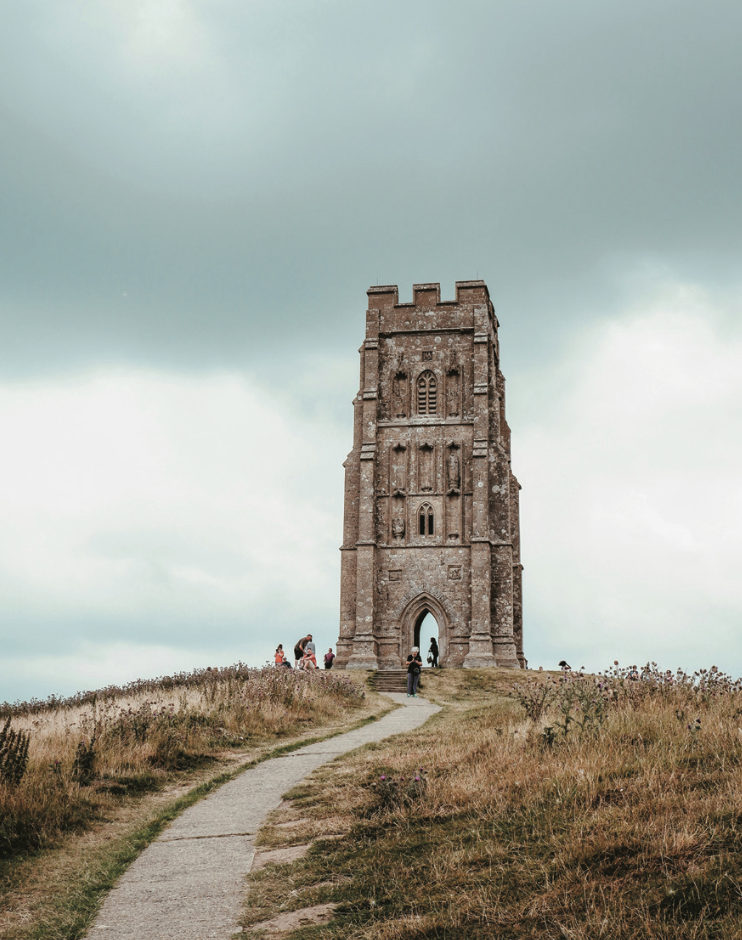
St Michael’s Tower Glastonbury, Somerset On top of Glastonbury Tor, this ruined church stone tower has Saxon origins, mystic connections and a grisly past. In 1549, Abbot Richard Whiting was executed here by order of Thomas Cromwell. For centuries, the Tor has been a site of pilgrimage. Legend has it that beneath the hill a cave leads to the fairy realm of Annwn, where Gwynap Nudd, the ruler of the Celtic underworld, resides. According to later traditions, the Holy Grail was brought by Joseph of Arimathea. nationalchurchestrust.org
Tintagel Castle Tintagel, Cornwall Its rooms have inspired writers like Edith Wharton and Thomas Hardy. And this eerie old castle, built onto a headland projecting into the Cornish Sea is shrouded in legend. Cross the footbridge and take in the dramatic coastline to reach the famous seat of ancient Cornish kings, best known as the place where, allegedly, King Arthur was conceived. In the 1230s, entranced by the myths surrounding the site, Richard, Earl of Cornwall built the clifftop castle. By 1337, it was already in ruins. english-heritage.org.uk
Hermit’s Cave Redcliffe, Bristol Across the tiny green triangle known as the Quaker’s Burial Ground, in the shadows of St Mary Redcliffe church and now incongruously tucked below the excellent Colosseum pub, lies a lonely and shadowy grotto. Carved into the hillside in 1346, it was the home of Thomas Lord Berkeley’s hermit, John Sparkes, whose job was to pray for the family along with being a whimsical source of amusement. Part of Bristol’s historic Redcliffe Caves, the chamber is now filled with ancient Quaker gravestones. historicengland.org.uk
Dupath Well Callington, Cornwall This historical monument resembles a cute (if a little spooky) witch’s house. But Dupath Well is also a focal point of local lore and traditions. According to hearsay, the stone structure, built by the Augustinian canons of the St Germans Priory circa 1500, stands over a sacred spring. The water was thought to possess healing properties, specifically curing whooping cough, which attracted visitors seeking a dip in its immersion pool – the remains of which are still visible today. english-heritage.org.uk
Jack the Treacle Eater Yeovil, Somerset One of a collection of structures erected on the boundaries of Barwick Park Estate, this folly has a stone arch, topped with a circular hamstone tower and adorned with a conical roof. At its pinnacle stands a winged statue of Hermes, the Greek god of messengers. Local lore has it that in the 19th century, the owners employed a messenger boy who fuelled his journeys to London with treacle. Adding a touch of mystery, the turret houses an enigmatic door to a solitary, inaccessible room. historicengland.org.uk
Stourhead grotto Warminster, Wiltshire There’s an array of follies in this magical 18th- century estate, but on a prance around Stourhead’s Romantic-era paradise, the grotto is the most atmospheric of all. Down wobbly steps to a fairy cave of mossy rocks and pebbles, you can stand in darkness while you contemplate the gleaming statues of Neptune and Ariadne. Commissioned by Stourhead’s owner Henry Hoare in 1748, the grotto’s sense of mystery and enchantment is still very much a delight today. nationaltrust.org.uk
Knill’s Steeple St Ives, Cornwall In his will of 1797, eccentric former mayor John Knill decreed that every five years the town of St Ives should celebrate him around his mausoleum, which was built in the form of a 15-metre granite obelisk. Knill was supposed to be interred in the vault beneath it, but he died in London in 1811 and was buried there instead. Nevertheless, since July 25 1801, when Knill himself was present, hundreds of St Ivians gather and sing the 100th Psalm, All People That on Earth do Dwell. steeplewoods.org
Lidwell Chapel Dawlish, Devon At the end of an overgrown footpath, this tumbledown structure is the last remaining wall of a medieval chapel built on the site of a holy well. Thought to be haunted, the building was the hangout of a 14th-century monk. One who reportedly lured passing travellers inside before robbing and murdering them. The chapel has been the subject of many paranormal investigations; in the 1970s, a Bristol photographer claimed his developed prints revealed a fully formed chapel instead of the ruins. historicengland.org.uk